A back office that ate the workday
Vitta sells one of the most document-heavy purchases a person ever makes: a home, with financing and subsidy paperwork attached. They already had a back-office system storing client documents and profiles — but it wasn't intuitive. Employees managed collection and organization by hand, chasing files instead of talking to customers.
The mission was to redesign the process end to end: better usability, better efficiency, better customer experience. With one hard constraint — whatever we designed had to integrate with the system they already had. No greenfield.
Time spent chasing paperwork was time not spent on sales and customer interaction.
Strip the bias first. Then stop designing a form.
Two decisions defined this project — one about how we started, one about what we built.
First: we refused to open with the system. I facilitated a LEGO Serious Play session with Vitta staff from every department and level, so people could think about the problem without their initial biases. Then we framed it formally — true objectives, success and failure criteria, differentiators, risks — and framed the research: what we needed to discover, what hypotheses existed, who could validate them. That framing exposed assumptions that later proved incorrect. Had we designed straight from the brief, we would have built on them.
Second: we stopped treating document collection as a form to be filled and reframed it as a conversation to be had. The concept became a conversational assistant — a traditional messaging UI combined with graphical components for real-estate visualization — designed for modular deployment, so Vitta could roll features out gradually against the legacy back office instead of betting on one big launch.
From workshop bricks to a working assistant
-
Map who buys, and how the journey actually unfolds
A second workshop defined three customer personas — demographics, digital behavior, communication preferences — and mapped the customer journey using the "How to Make a Toast" method, extracting from employees how the process really runs from marketing impact to key delivery, not how the org chart says it runs. We then broke the journey into micro-steps and macro-steps, clustered into logical phases that optimized the sequence for clarity and a secure workflow.
The journey restructured into micro-steps and macro-steps, clustered into logical phases — from marketing impact to key delivery. -
Tie the experience to the machine underneath
Every part of the digital experience was mapped by four elements: content and information; actions (CTAs, external links, interactions); user input fields; and system feedback. In parallel, I worked with Vitta's developers on a technical action map — what data gets collected, how it's stored and retrieved, how system variables behave on the backend — so UX decisions and technical feasibility were never negotiated after the fact.
Four-element experience mapping wired to a technical action map — UX and feasibility resolved together, not sequentially. -
Sketch fast, validate, then commit to high fidelity
Ideation ran on hand-drawn low-fidelity prototypes and Crazy 8s — eight UI solutions in eight minutes. The strongest direction, the conversational interface, was refined and validated in low fidelity with internal teams and Vitta's own clients before any pixel-perfect work. Only then did we build the high-fidelity prototype: an assistant that carries a buyer from initial interest in a property all the way to finalized documentation and subsidy approval.
The Felí concept: a messaging UI as the spine, with graphical modules plugged in — each one shippable on its own phase. 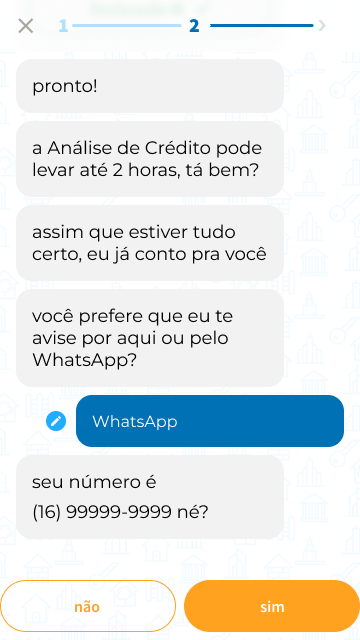
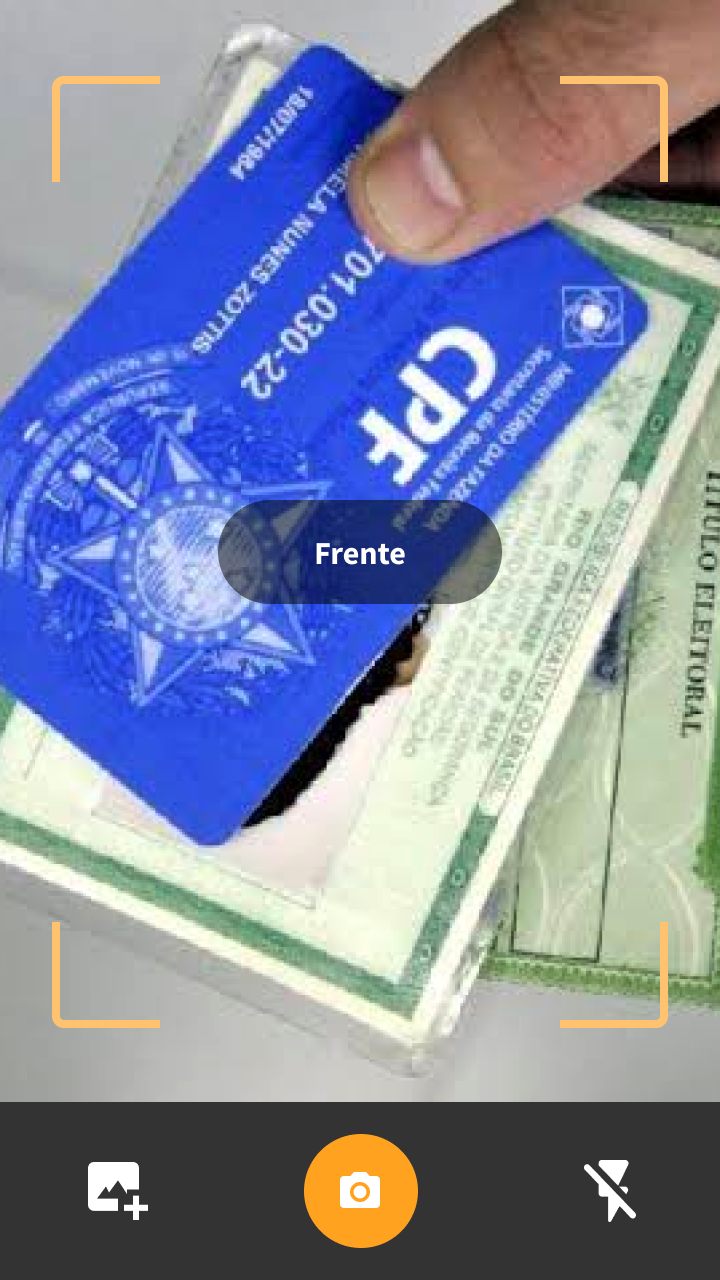
Straight from the high-fidelity prototype: the conversation doing the paperwork, and the camera flow submitting a document.